Jajangmyeon (Korean Black Bean Noodles) Recipe
Introduction
Jajangmyeon is a beloved Korean-Chinese noodle dish featuring thick wheat noodles smothered in a savory black bean sauce with tender pork and fresh vegetables. This comforting meal is perfect for a flavorful weeknight dinner that feels like a special treat.
Ingredients
- 24 oz jajangmyeon wheat noodles (fresh)
- 10 oz pork belly (diced)
- 1 teaspoon ginger (grated)
- 1 tablespoon mirin
- 1/4 teaspoon black pepper
- 1 tablespoon soy sauce
- 3 tablespoon vegetable oil
- 1/2 cup Korean roasted black bean paste (Chunjang)
- 2 tablespoon brown sugar
- 1 cup chicken stock
- 1 1/2 tablespoon oyster sauce
- 1/4 teaspoon MSG (optional)
- 1 1/2 tablespoon cornstarch
- 3 tablespoon water
- 1 medium yellow onion (diced)
- 2 stalks green onion (chopped)
- 1 cup potato (peeled and diced)
- 1 cup zucchini (diced)
- 1 cup green cabbage (diced)
- 1 cucumber (julienned for garnish)
- Toasted sesame seeds
- Pickled yellow radish (Danmuji)
Instructions
- Step 1: Marinate the pork by combining diced pork belly, grated ginger, mirin, salt, black pepper, and soy sauce in a medium bowl. Mix well and set aside.
- Step 2: Toast the black bean paste in a large skillet over low heat with vegetable oil and brown sugar. Stir frequently for 3-4 minutes to avoid burning. Transfer to a small bowl and discard excess oil.
- Step 3: Increase the skillet heat to medium and add 1 tablespoon oil. Cook the marinated pork until lightly browned on the edges. Remove and set aside.
- Step 4: In the same skillet, heat 1 tablespoon oil over medium heat. Add diced yellow onion and green onion, cooking until fragrant and translucent. Add diced potato and zucchini, stir for 3-5 minutes until softened. Then add cabbage and cook until wilted, about 2-3 minutes.
- Step 5: Return the black bean paste and cooked pork to the skillet. Stir to combine. Pour in chicken stock, oyster sauce, and MSG if using. Mix well and simmer for 2-3 minutes until smooth.
- Step 6: Prepare the cornstarch slurry by mixing cornstarch and water in a small bowl. Add the slurry to the simmering sauce and stir until the sauce thickens.
- Step 7: Cook the jajangmyeon noodles in boiling water for 3-4 minutes or until al dente. Drain thoroughly.
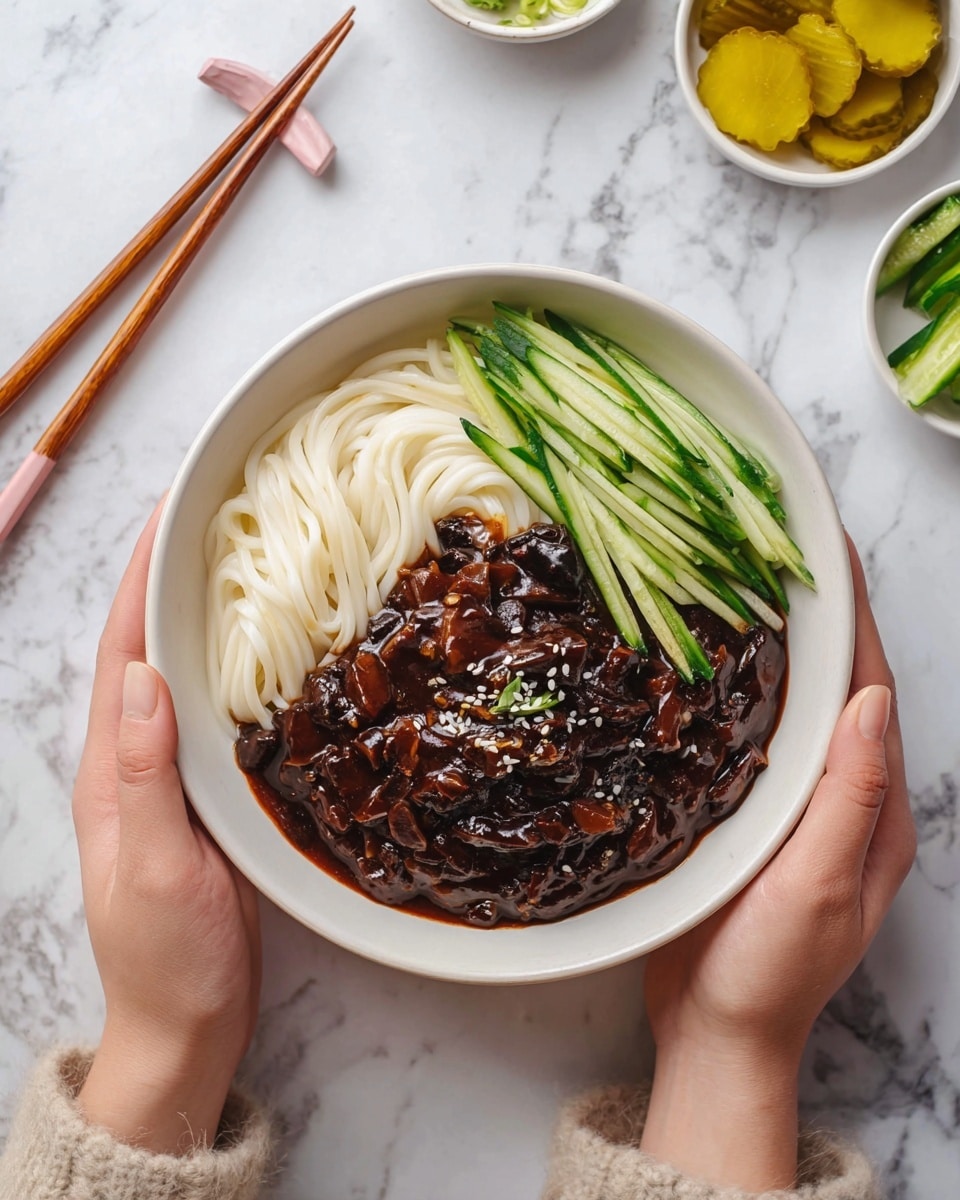
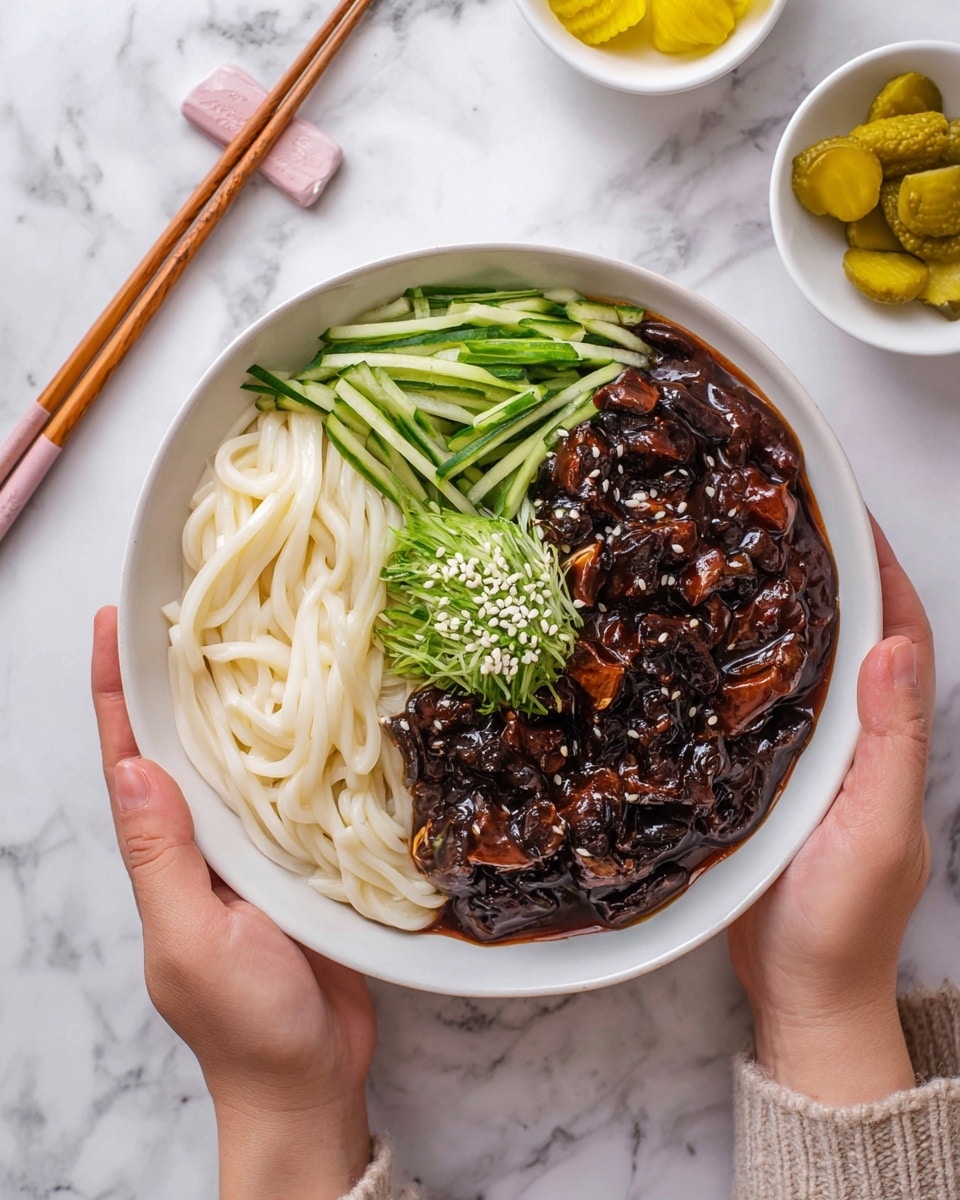
- Step 8: Serve the noodles in individual bowls. Pour the thickened sauce on top and garnish with julienned cucumber, toasted sesame seeds, and a side of pickled yellow radish (danmuji). Enjoy!
Tips & Variations
- Use fresh jajangmyeon noodles for authentic texture, but dried wheat noodles can work in a pinch.
- Add a bit of diced pork shoulder if you prefer leaner meat over pork belly.
- Try substituting the potato with a sweet potato or carrot for a different sweetness.
- If black bean paste is hard to find, Korean grocery stores or online specialty shops are reliable sources.
Storage
Store leftover sauce and noodles separately in airtight containers in the refrigerator for up to 2 days. Reheat the sauce gently on the stove, adding a splash of water or stock to loosen if needed. Warm the noodles by briefly dipping them in hot water before serving.
How to Serve
Serve this delicious recipe with your favorite sides.
FAQs
Can I make Jajangmyeon vegetarian?
Yes, you can omit the pork and use mushrooms or tofu instead. Use vegetable stock instead of chicken stock for the sauce. You can also add more vegetables like bell peppers or carrots to enhance flavor.
What is the difference between Jajangmyeon and Chinese Zhajiangmian?
While both dishes use a fermented soybean paste sauce over noodles, Jajangmyeon is the Korean adaptation that typically uses a sweeter, roasted black bean paste called Chunjang and includes specific vegetables and pork belly. Chinese Zhajiangmian varies regionally but often has a saltier, less sweet sauce and different toppings.
PrintJajangmyeon (Korean Black Bean Noodles) Recipe
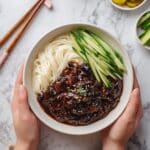
Jajangmyeon is a classic Korean-Chinese noodle dish featuring fresh wheat noodles topped with a savory, rich black bean sauce made from Korean roasted black bean paste (Chunjang), pork belly, and a medley of vegetables. This comforting dish is garnished with crisp cucumber, toasted sesame seeds, and served with pickled yellow radish, delivering a perfect balance of umami and freshness.
- Prep Time: 20 minutes
- Cook Time: 25 minutes
- Total Time: 45 minutes
- Yield: 4 servings 1x
- Category: Stovetop
- Method: Stovetop
- Cuisine: Korean
Ingredients
Noodles
- 24 oz jajangmyeon wheat noodles (fresh)
Meat and Marinade
- 10 oz pork belly (diced)
- 1 teaspoon ginger (grated)
- 1 tablespoon mirin
- 1/4 teaspoon black pepper
- 1 tablespoon soy sauce
Sauce
- 3 tablespoon vegetable oil
- 1/2 cup Korean roasted black bean paste (Chunjang)
- 2 tablespoon brown sugar
- 1 cup chicken stock
- 1 1/2 tablespoon oyster sauce
- 1/4 teaspoon MSG (optional)
- 1 1/2 tablespoon cornstarch
- 3 tablespoon water
Vegetables
- 1 medium yellow onion (diced)
- 2 stalks green onion (chopped)
- 1 cup potato (peeled and diced)
- 1 cup zucchini (diced)
- 1 cup green cabbage (diced)
Garnish
- 1 cucumber (julienned for garnish)
- Toasted sesame seeds
- Pickled yellow radish (Danmuji)
Instructions
- Marinate the pork: In a medium-sized mixing bowl, combine the diced pork belly with grated ginger, mirin, black pepper, and soy sauce. Mix thoroughly to ensure the pork is evenly coated. Set aside to allow the flavors to meld.
- Toast the black bean paste: Heat vegetable oil in a large skillet over low heat. Once hot, add the Korean roasted black bean paste and brown sugar. Stir continuously for 3-4 minutes to toast the paste evenly and deepen its flavor, taking care not to burn it. Transfer the toasted paste to a small bowl and discard any excess oil in the skillet.
- Cook the pork: Increase the skillet heat to medium and add 1 tablespoon of oil. Add the marinated pork and cook until the edges are lightly browned, which takes about 4-5 minutes. Remove the pork from the skillet and set aside.
- Cook the vegetables: Add another tablespoon of oil to the skillet over medium heat. Sauté diced yellow onion and chopped green onion until fragrant, translucent, and lightly browned, about 3-4 minutes. Add diced potato and zucchini, stirring occasionally until softened, about 3-5 minutes. Finally, add diced cabbage and cook until wilted, around 2-3 minutes.
- Add sauce components: Return the toasted black bean paste and cooked pork to the skillet with the vegetables. Toss to combine evenly. Pour in chicken stock, oyster sauce, and optional MSG. Stir the mixture and let it simmer for 2-3 minutes until the sauce is smooth and well blended.
- Thicken the sauce: In a small bowl, mix cornstarch with water to create a slurry. Slowly pour it into the simmering sauce while stirring continuously. Cook until the sauce thickens to a glossy, smooth consistency.
- Cook noodles: Bring a large pot of water to a rolling boil. Add the fresh jajangmyeon wheat noodles and cook for 3-4 minutes until al dente. Drain the noodles thoroughly.
- Serve: Divide the noodles into individual bowls. Generously ladle the thick black bean sauce over the noodles. Garnish each bowl with julienned cucumber, toasted sesame seeds, and serve with a side of pickled yellow radish (Danmuji). Enjoy this hearty and flavorful dish!
Notes
- Fresh jajangmyeon noodles are preferred for the best texture; if unavailable, fresh wheat noodles or thick udon can be used as a substitute.
- The black bean paste can be adjusted in quantity based on desired saltiness and intensity of flavor.
- MSG is optional and can be omitted for those who prefer to avoid it.
- To save time, vegetables can be diced in advance and stored refrigerated.
- For a vegetarian version, omit pork and substitute chicken stock with vegetable broth.
- Be careful when toasting the black bean paste as it can burn quickly due to its sugar content.
Keywords: Jajangmyeon, Korean black bean noodles, Korean noodle recipe, black bean sauce, Korean cuisine