Jajangmyeon (Korean Black Bean Noodles) Recipe
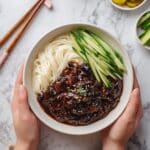
Jajangmyeon is a classic Korean-Chinese noodle dish featuring fresh wheat noodles topped with a savory, rich black bean sauce made from Korean roasted black bean paste (Chunjang), pork belly, and a medley of vegetables. This comforting dish is garnished with crisp cucumber, toasted sesame seeds, and served with pickled yellow radish, delivering a perfect balance of umami and freshness.
- Prep Time: 20 minutes
- Cook Time: 25 minutes
- Total Time: 45 minutes
- Yield: 4 servings 1x
- Category: Stovetop
- Method: Stovetop
- Cuisine: Korean
Ingredients
Scale
Noodles
- 24 oz jajangmyeon wheat noodles (fresh)
Meat and Marinade
- 10 oz pork belly (diced)
- 1 teaspoon ginger (grated)
- 1 tablespoon mirin
- 1/4 teaspoon black pepper
- 1 tablespoon soy sauce
Sauce
- 3 tablespoon vegetable oil
- 1/2 cup Korean roasted black bean paste (Chunjang)
- 2 tablespoon brown sugar
- 1 cup chicken stock
- 1 1/2 tablespoon oyster sauce
- 1/4 teaspoon MSG (optional)
- 1 1/2 tablespoon cornstarch
- 3 tablespoon water
Vegetables
- 1 medium yellow onion (diced)
- 2 stalks green onion (chopped)
- 1 cup potato (peeled and diced)
- 1 cup zucchini (diced)
- 1 cup green cabbage (diced)
Garnish
- 1 cucumber (julienned for garnish)
- Toasted sesame seeds
- Pickled yellow radish (Danmuji)
Instructions
- Marinate the pork: In a medium-sized mixing bowl, combine the diced pork belly with grated ginger, mirin, black pepper, and soy sauce. Mix thoroughly to ensure the pork is evenly coated. Set aside to allow the flavors to meld.
- Toast the black bean paste: Heat vegetable oil in a large skillet over low heat. Once hot, add the Korean roasted black bean paste and brown sugar. Stir continuously for 3-4 minutes to toast the paste evenly and deepen its flavor, taking care not to burn it. Transfer the toasted paste to a small bowl and discard any excess oil in the skillet.
- Cook the pork: Increase the skillet heat to medium and add 1 tablespoon of oil. Add the marinated pork and cook until the edges are lightly browned, which takes about 4-5 minutes. Remove the pork from the skillet and set aside.
- Cook the vegetables: Add another tablespoon of oil to the skillet over medium heat. Sauté diced yellow onion and chopped green onion until fragrant, translucent, and lightly browned, about 3-4 minutes. Add diced potato and zucchini, stirring occasionally until softened, about 3-5 minutes. Finally, add diced cabbage and cook until wilted, around 2-3 minutes.
- Add sauce components: Return the toasted black bean paste and cooked pork to the skillet with the vegetables. Toss to combine evenly. Pour in chicken stock, oyster sauce, and optional MSG. Stir the mixture and let it simmer for 2-3 minutes until the sauce is smooth and well blended.
- Thicken the sauce: In a small bowl, mix cornstarch with water to create a slurry. Slowly pour it into the simmering sauce while stirring continuously. Cook until the sauce thickens to a glossy, smooth consistency.
- Cook noodles: Bring a large pot of water to a rolling boil. Add the fresh jajangmyeon wheat noodles and cook for 3-4 minutes until al dente. Drain the noodles thoroughly.
- Serve: Divide the noodles into individual bowls. Generously ladle the thick black bean sauce over the noodles. Garnish each bowl with julienned cucumber, toasted sesame seeds, and serve with a side of pickled yellow radish (Danmuji). Enjoy this hearty and flavorful dish!
Notes
- Fresh jajangmyeon noodles are preferred for the best texture; if unavailable, fresh wheat noodles or thick udon can be used as a substitute.
- The black bean paste can be adjusted in quantity based on desired saltiness and intensity of flavor.
- MSG is optional and can be omitted for those who prefer to avoid it.
- To save time, vegetables can be diced in advance and stored refrigerated.
- For a vegetarian version, omit pork and substitute chicken stock with vegetable broth.
- Be careful when toasting the black bean paste as it can burn quickly due to its sugar content.
Keywords: Jajangmyeon, Korean black bean noodles, Korean noodle recipe, black bean sauce, Korean cuisine